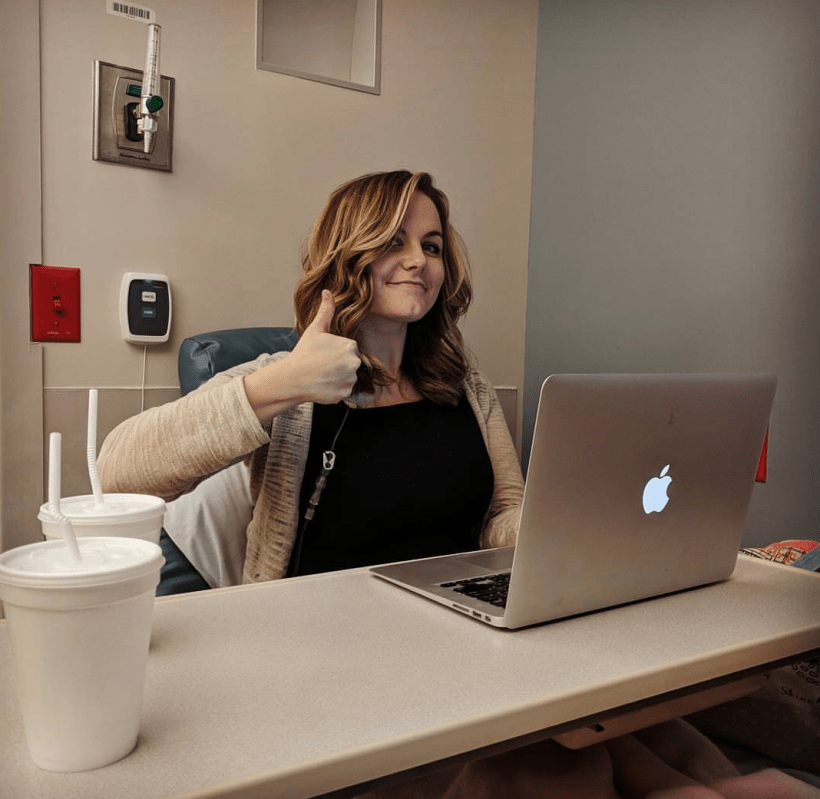
The last time I was treated for my cancer, I was not working, which for me was kind of a torture in and of itself. I’m the kind of person who likes to have a bunch of plates spinning. I learn and thrive in the doing of things. To give you a clearer picture, I went from completing two degrees, producing concerts, and working as a part-time agent for folks in NY and LA, to studying for the California bar exam and preparing to move to LA to start my career there and planning a wedding, to nothing– nothing but surgery recovery, chemo, and reflection on the worst news of my life.
Receiving a cancer diagnosis sent all my spinning plates, professional and personal, crashing to the ground. During treatment, I was more or less told to sit and stare at the broken pieces. It was painful– necessary, but painful nonetheless.
I am grateful for the time I had to reflect on my situation. It was a huge adjustment. But this time, even though going into treatment the second time around is a little defeating in and of itself (as anyone who has experienced recurrence can probably tell you) I am excited to be working through treatment. It represents a shift for me and the way I relate to my cancer that I feel is important: I call it the “you don’t own me” shift. I’m choosing to treat my cancer as a chronic condition rather than a life-limiting disability for as long as humanly possible.

Now, I won’t tell you it’s a walk in the park. Having done both in past six months, I can say with some authority that it’s at least twice as hard to work during treatment than it is to work off of it. On days when my short term memory is bad or I’m sleep-deprived due to steroids, I have to triple check my emails before I send them and even then, mistakes happen. It takes considerably more time and effort to get through my to-do list by 5:30 PM, and even more effort to unplug from my inner perfectionist (and my laptop) and remind myself that my work-life balance is up to me.
Adding to the uncertainty of any 24 hours is the unknown factor. I’m on a clinical trial, which means that if my research team calls and says they need me to come in for blood work the next day or come in for a scan an hour earlier on the same day– both things that have happened to me so far on this trial– I really can’t say no. I also can’t miss the call because it will take me a half hour to get through to the right person again and all of this happens during work hours. All of that is to say that my autonomy in creating and sticking to a schedule is not what I’d like it to be. Recently, my infusion days were switched to a day earlier, which means every other Friday, I will be working through extreme chemo fatigue. Nothing I can do about that– it’s just the way it goes.
I have found that occasionally, I can make requests of my physicians and be my own advocate for work-life-treatment balance. I remind them that I’m working and ask if I can take steroids on those post-chemo days I have to work through or if we can push an appointment later so I can get a solid half day of work in before infusions start. Sometimes, we can find compromises. Sometimes, there are hard lines. But asking the questions helps sort out which is which and give me back a modicum of control.

Still, working through treatment is an adjustment and a moving target. What worked this round might not work the next round, and constantly reassessing what I am capable of is part of the game. For now, I’m taking it as it comes, trying to be as honest as possible with myself and colleagues about what I can handle, and trying to find that line of leaning on folks without burdening them: a line many cancer patients– working or not– know well.
And I am learning the hardest lesson, which is to slow down and give myself a break. I know what I can do at 100% capacity, but this is not a 100% capacity time in my life (which is especially frustrating as a young adult who would very much like to prove their professional worth, but that’s a different story for a different blog). That doesn’t mean I can’t give it all the capacity I do have, I just need to pay attention to what that capacity is.
It’s an exercise in fortitude, frustration, and humility, but one I am willing to take on. I am treating my cancer as a chronic illness, not the life-breaking beast it was to me two and half years ago. I tried to live outside of the “cancer bubble” for the 6 months I was NED and when I recurred, I had to face some unpleasant facts: I’m a stage four cancer survivor and I’m already living past the normal life expectancy for my diagnosis. I can choose to see that as a scary, unknowable ticking clock of borrowed time, or I can choose to see it as time that I get to make the most of. I choose the latter.
Fighting for policies that improve the lives of cancer patients and spending time with the people who matter most to me doing things that bring us joy and fulfillment is how I’m doing that. And if I have to work twice as hard to do it, then let’s send that plate spinning.
Today, I can handle it.

 The Thing With Feathers